
IB-Inspired vs CBSE for Ages 3–8: A Guide for Kochi Parents
Choosing between an IB-inspired or CBSE school in Kochi for your 3–8 year old? What's different, what overlaps, and what to look for in a classroom.

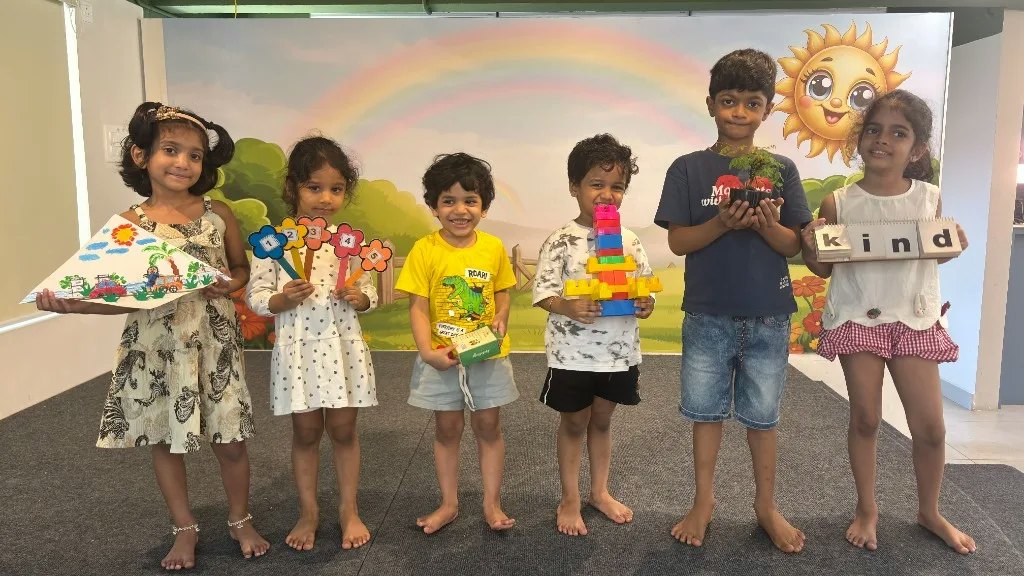
If you're looking at preschools and primary schools in Kochi for a child between 3 and 8, you'll quickly meet two labels: CBSE and IB-inspired.
It's natural to ask, "Which one is better?" A more useful question is:
"How does my child learn best — and which classroom will help them do that?"
At this age, children aren't only learning letters and numbers. They're learning how to think, communicate, explore, ask questions and make sense of the world around them. This guide explains what each label actually means, where they differ, where they overlap more than you might expect, and what to look for when you visit a school.
First, what do the labels mean?
CBSE (Central Board of Secondary Education) is a national school board. For the early years, schools across India — CBSE schools included — are guided by the National Curriculum Framework for the Foundational Stage (NCF-FS 2022), which grew out of NEP 2020 and covers children aged 3 to 8: three years of preschool plus Classes 1 and 2.
IB (International Baccalaureate) runs the Primary Years Programme (PYP) for children aged 3 to 12. Only schools authorised by the IB can offer the PYP.
"IB-inspired" is different. It isn't a board or a certificate. It describes a school that borrows the IB's way of teaching — inquiry, concepts, real-world connections — without being an IB World School. So when you compare "IB-inspired" with "CBSE", you're really comparing a teaching approach with a board and its framework. That's worth keeping in mind as you read on.
IB-inspired vs CBSE: what you'll typically see
Every school is different, so treat this as a general picture rather than a rule.
| IB-inspired classroom | Typical CBSE classroom | |
|---|---|---|
| Starting point | A question or a real-world problem | A planned lesson and learning outcome |
| Child's role | Leads parts of the inquiry | Follows a teacher-planned sequence |
| Teacher's role | Plans, guides and steps back | Plans, explains and checks progress |
| Subjects | Often blended into themes | Usually taught as separate subjects |
| Progress shown through | Observations, projects, portfolios | Worksheets, activities, assessments |
But there's more overlap than the labels suggest. NCF-FS itself asks for play, activity, exploration and strong foundational literacy and numeracy for every child aged 3–8. Many good CBSE schools teach this way, and many good IB-inspired schools teach the basics carefully. The real difference is usually how these ideas show up in the classroom every day.
1. Starting with questions
In an inquiry-led classroom, a question can be where learning begins.
Instead of simply learning "Plants need water," children might explore: "What happens if we give this plant more water? What if we give it less?"
They observe. They predict. They try it. They talk about what they saw.
The child isn't just receiving an answer — they're building an understanding they can explain.
2. Connecting subjects to real life
Young children don't see the world in separate subjects. A simple walk around the neighbourhood can include:
Science — noticing plants, birds and insects
Maths — counting, comparing and measuring
Language — describing what they see and hear
Social learning — understanding the people and places around them
Learning sticks better when it connects to a world children already know.
3. Remembering and understanding
Memory matters. Children need to remember numbers, sounds, words, facts and ideas.
But knowing an answer isn't always the same as understanding it. A child can memorise 5 + 5 = 10. A child who puts out five blocks, adds five more, explains what happened and then uses the same idea to share snacks fairly has understood it.
Strong foundations need both: knowledge and the ability to use it.
4. The child as an active participant
An inquiry-led classroom does not mean children are left to teach themselves. Teachers stay essential. They introduce concepts, ask good questions, provide materials, set structure and guide children through their learning.
The difference is that children are encouraged to:
Ask questions
Explore ideas
Make observations and connections
Explain their thinking
Reflect on what they discovered
Does inquiry mean less academic learning?
Not at all. Inquiry and academics aren't opposites. Every child still needs strong foundations in:
Reading and writing
Numbers and early maths
Spoken language
General knowledge
Communication
The question is how children meet those ideas. A child can learn numbers in a lesson — and then use them while measuring, sorting, building or playing. The learning stays academic. It just becomes connected to experience.
What if my child moves to a CBSE school later?
This is one of the most common questions we hear from Kochi parents, and it's a fair one.
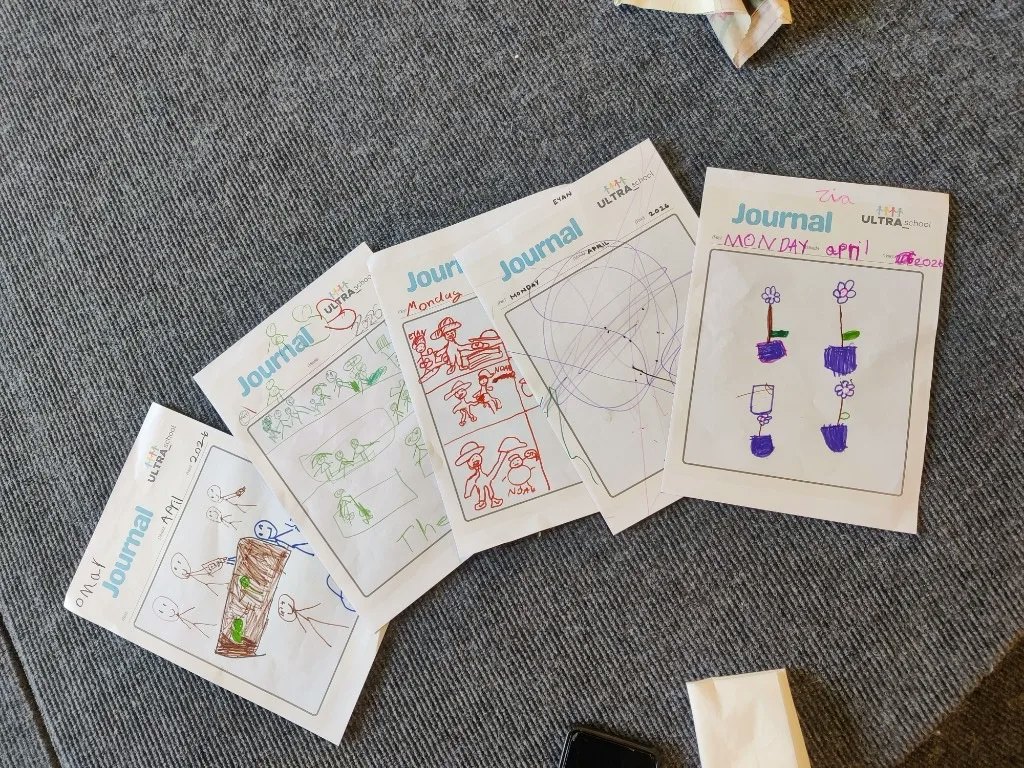
Children who move from ULTRA to a CBSE school will take with them the foundational academic skills, learning habits, confidence and social skills they have developed at ULTRA. We also maintain a record of each child's learning and progress to support a smooth transition to their next school.
Growing step by step at ULTRA
Every child develops and learns at their own pace. The National Curriculum Framework for the Foundational Stage (NCF-FS) gives us clear learning goals for children between 3 and 8 years.
At ULTRA, our IB-inspired approach supports these same important early skills — language and communication, reading, writing, numbers, thinking, social skills, creativity and physical development.
We regularly observe and track each child's progress so that we know what they have learnt, what they are ready to learn next, and where they may need a little more support.
Parents can stay connected through the ULTRA App, where their child's learning journey, progress and strengths are shared.
As children complete their time at ULTRA and move to their next school, we can provide their learning and progress record to help make the transition smooth and give the new school a better understanding of the child.
So, what should parents look for?
Instead of choosing a school only by the words IB or CBSE, look inside the classroom. When you visit, ask:
Does my child get to ask questions — and are those questions followed up?
Are reading, writing and numbers taught carefully and meaningfully?
Is learning connected to everyday life?
Can children explore, experiment and make mistakes?
Does the teacher notice that children learn in different ways?
Are children encouraged to explain their thinking?
Does the school balance academics with creativity, communication and social development?
How many children are there for each adult?
The label tells you less than the learning experience does.
Where does ULTRA_school fit?
ULTRA_school is an IB-inspired, NEP 2020-aligned early-years school for children aged 3–8 in Jawahar Nagar, Kochi. We are not an IB World School and not a CBSE-affiliated school. We take inspiration from inquiry-led, child-centred approaches while keeping a strong focus on foundational literacy and numeracy.
We believe children shouldn't only learn what something is. They should also have the chance to understand: Why does it matter? How does it connect to the world around me? How can I use what I know?
That belief comes together in a few simple ideas.
The city is our classroom
At ULTRA, learning does not stop at the school gate. The world around us becomes our classroom. Children learn by seeing, touching, listening, asking questions and experiencing things for themselves.
During our Fort Kochi Neighbourhood Walk, children explored the streets, shops, community spaces and heritage buildings around Fort Kochi. They visited places such as the Police Station, local shops and market, Post Office and Santa Cruz Basilica, while observing the streets, buildings and everyday life around them.
As they walked through the narrow streets and heritage areas, children discovered how people live and work, how communities come together, and how the past and present exist side by side. They observed the colourful fishing boats, the fishing harbour, shipyards and huge cranes, and became curious about how ships are built and how the harbour supports the community.
They also explored places of worship and heritage sites, helping them understand that different communities, traditions and cultures are all part of the world around them.
These real-life experiences encourage children to observe, ask questions, make connections and learn from the world around them.
And sometimes, the most meaningful learning happens in the simplest moments.
During our Grandparents' Day, for example, children shared rhymes, songs and activities with their grandparents. It was more than a celebration — it gave grandparents an opportunity to see their grandchildren in their learning environment, meet their teachers and understand the experiences that are part of their everyday life at ULTRA. For the children, it was a beautiful opportunity to share their world with the people they love.
At ULTRA, we believe that every walk, every conversation, every discovery and every real-world experience can become a learning moment.
Small groups, close attention
With one mentor for every five children, teachers can notice how each child learns and adjust.
Technology as a tool
Days are play-based and screen-light. Technology is used on purpose to support learning, creativity and communication with families — not simply because it's there.
An evolving curriculum
The world is changing, and children's learning should be able to change with it, while still building strong foundations.
For children between 3 and 8, education isn't only about getting ready for the next class. It's about building the curiosity, confidence, knowledge and ability to think that they'll carry with them.
Because learning isn't just about knowing the answers. It's also about becoming confident enough to ask better questions.
Related reading: IB-inspired preschool in Kochi · Preschool and kindergarten in Kochi · A play-based alternative to Montessori
Frequently asked questions
Is ULTRA_school a CBSE school?
No. ULTRA_school is not affiliated with CBSE or the IB. Our early-years programme is IB-inspired and aligned with NEP 2020 and the NCF-FS goals for ages 3–8.
Is ULTRA_school an IB school?
No. ULTRA_school is not an IB World School and does not offer the IB Primary Years Programme. "IB-inspired" means we draw on the IB's inquiry-based way of teaching.
Is IB better than CBSE for preschool?
Neither is better for every child. For ages 3–8, the quality of the classroom — how teachers teach, how many children each adult looks after, and how well reading and numbers are taught — matters more than the label.
Can my child join a CBSE school after ULTRA?
Yes. ULTRA prepares children with the foundational skills they need to confidently move on to a CBSE school or another mainstream school.
We build strong academic and communication skills through:
Listening and speaking
Reading and reading comprehension
Writing and spelling
Phonics and early literacy skills
Early numeracy and mathematical thinking
Alongside academics, we focus on the whole child. Children develop gross motor and fine motor skills, independence, social skills, confidence, communication and positive values that help them become responsible and caring citizens of the future.
Our aim is not simply to prepare children for the next class, but to help them become confident, capable and curious learners who are ready for their next stage of education.
What are the fees at ULTRA_school?
Fees depend on your child's studio and whether you add afterschool enrichment. We share the full fee structure with every family at the first visit or on request — email anita@ultraschool.in or call +91 81369 46055.
See ULTRA_school for yourself
Visit our studios in Kochi and meet the facilitators behind these stories.